Executive Summary
Shipments bound for Alaska routinely make it to Anchorage, then stall in the gap between the port and the point of use. That "final mile" isn't a short hop: it's a multi-mode, seasonally volatile, accountability-sensitive chain where one missed handoff can trigger weeks of delays, surprise charges, and lost revenue. This deep dive explains why Alaska is a fundamentally different logistics environment, where Lower 48 playbooks break down, and what it actually takes to deliver predictably. We conclude with a practical framework for implementing a hybrid, single-owner model that makes Alaska's final mile reliable, without turning every delivery into a project rescue.
At a Glance
- Coordination Breakdown: Multiple handoffs create delivery blind spots.
- Costly Delays: Missed deliveries trigger emergency freight, fees, and lost sales.
- Massive Scale: 663,300 square miles, 6,200 paved roads, logistics complexity is extreme.
- Seasonal Strain: Retail surges in summer, but winter access collapses.
- Modern Fix: Hybrid logistics provide full-route accountability and pricing transparency.
Why Alaska's "Final Mile" Is Not a Mile at All
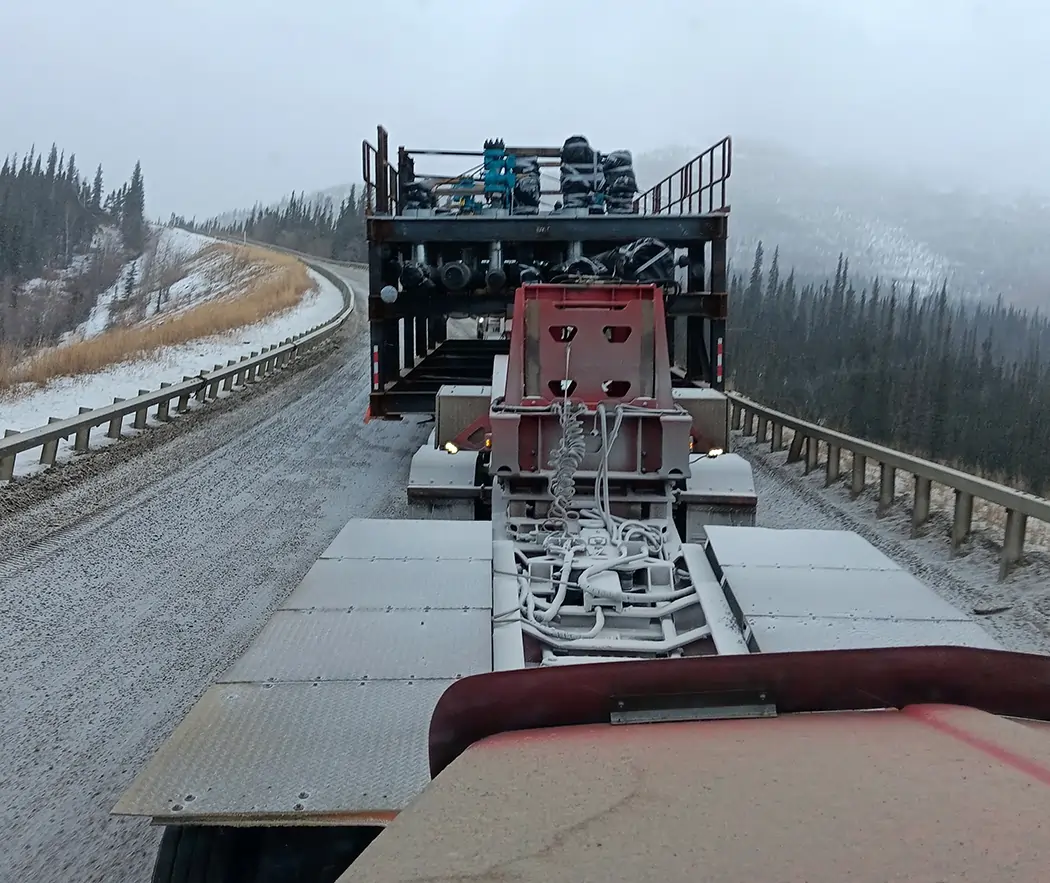
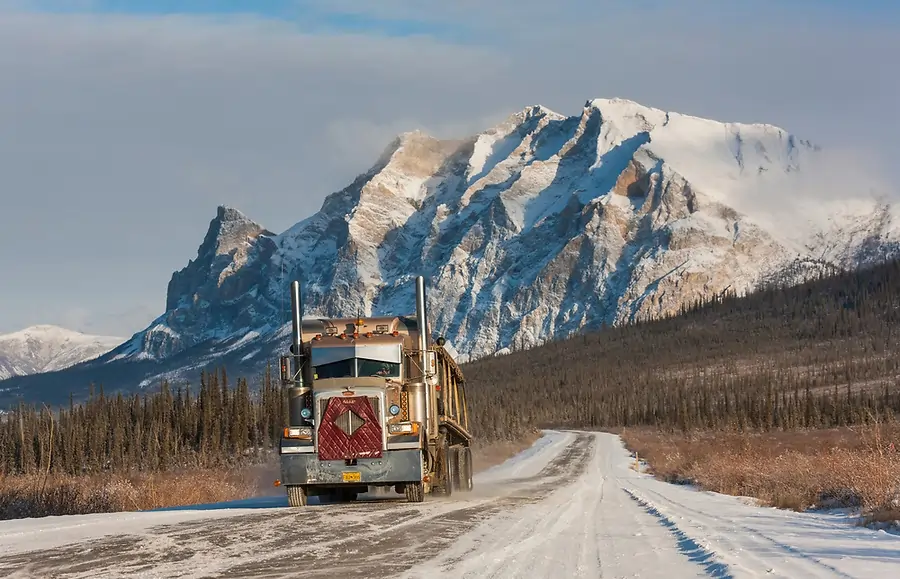
In most of the U.S., final mile means the last 10–50 miles from a DC to a door. In Alaska, the "mile" can stretch hundreds of miles beyond the road system, across terrain where roads simply stop, barges run on tight windows, air strips may be gravel, and winter redefines time itself.
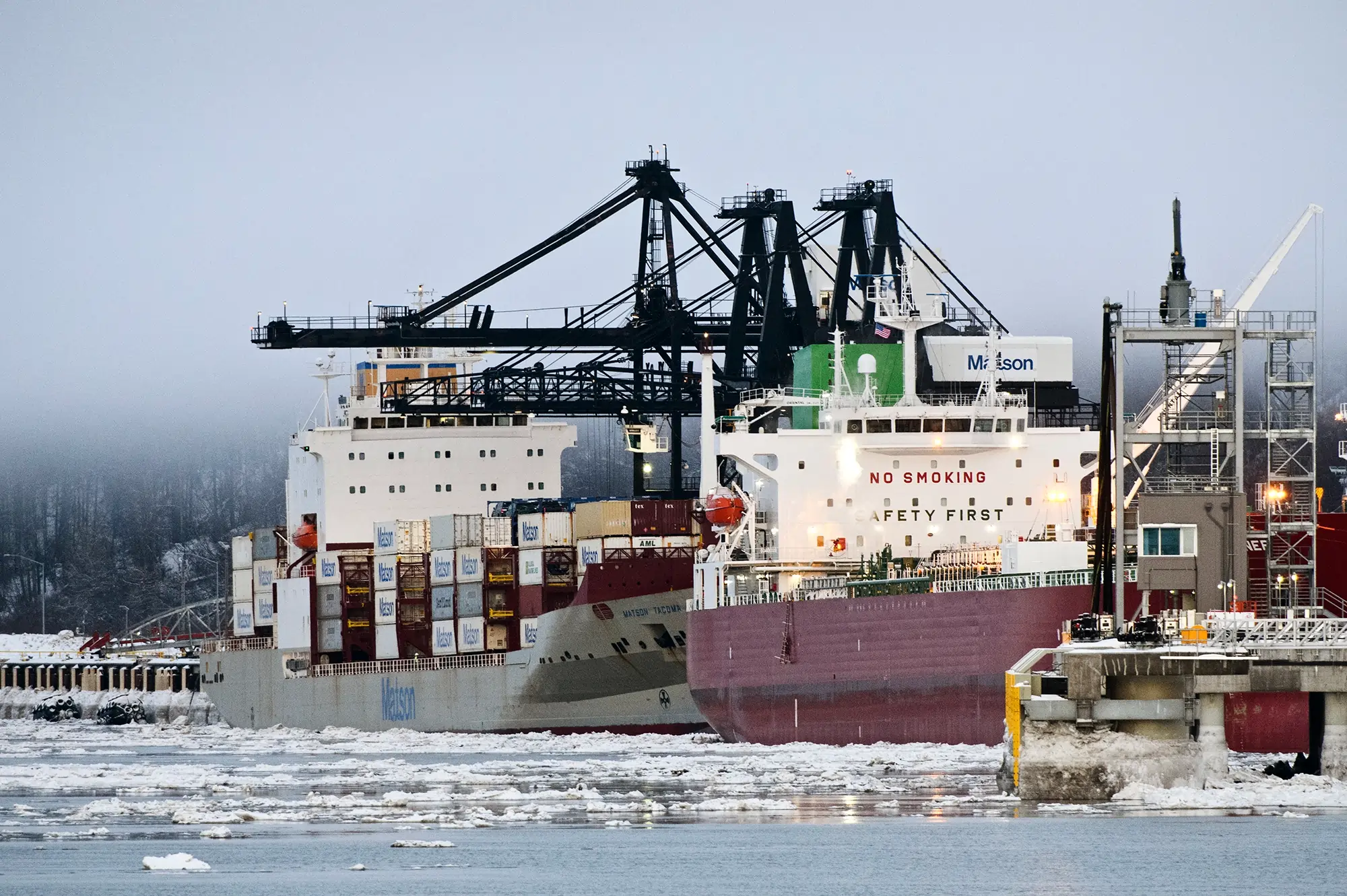
The state's vastness (covering an area larger than Texas, California, and Montana combined), its concentration of inbound freight through the Port of Alaska in Anchorage, and the sparseness of paved roads create a reality in which the last leg often involves multiple modes and professional judgment at every turn.
In practice, a single shipment might ride:
- 1. Truck → container → ocean vessel → truck → barge → truck, or
- 2. Truck → container → ocean vessel → air cargo → bush plane → local delivery, or
- 3. Truck → container → ocean vessel → truck → winter/ice road convoy → site-only transfer
Each transition is a potential failure point. And because the state's seasons radically alter what's feasible, roads that are open in summer may vanish as practical options in winter, planning can't be static. It has to be seasonal, place-aware, and accountable.
The Cost of Getting Alaska Wrong
Executives usually feel Alaska pain in three forms:
Budget shock hits first. Low base quotes that balloon after storage, re-handling, port fees, re-attempts, "out-of-area" surcharges, and seasonal premiums. Fragmented chains multiply chances to add line items.
Operational drag follows. Store managers and site leads spend hours chasing status. Central teams arbitrate between carriers. Meanwhile inventory sits, projects slip, and contingency plans (often air) erase margins.
Customer impact completes the cycle. An empty shelf during peak season or a missed component on a critical site isn't an "oops." It's real revenue loss, brand damage, and in healthcare or infrastructure contexts, risk.
Blaming weather is convenient but incomplete. In post-mortems, the root cause is more often human: a mis-scoped quote, a missed appointment at the port, an unverified site constraint, a poorly labeled pallet, a broken notification chain. Alaska punishes assumptions, not just schedules.
The Legacy Playbook, and Its Failure Modes
The "Big Box" Universal Carrier
The brand is known; the Alaska operation is not the core business. Handoffs to subcontractors are frequent. Alaska becomes the exception path where visibility tools thin out, status becomes "check back later," and resolution depends on who picks up the phone.
The Split-Vendor Chain
One provider to the port, another for in-state, maybe a broker for the remote leg. Procurement "optimizes" rates per segment. Then the bill grows in the seams: storage while one vendor waits for another, re-handling because labeling didn't suit the next carrier, missed windows because there's no orchestrator managing the critical path.
The Hands-Off Forwarder
Coordination is promised; accountability is diluted. When exceptions happen (they do), the forwarder escalates to a subcontractor who escalates to a local agent who waits for the consignee. Meanwhile the shipment ages.
Observed Failure Modes
- Handoffs per load > 3: Strong predictor of cost creep and dwell.
- No single clock: Everyone works their SLA; no one owns the end-to-end promise.
- Quote ≠ plan: Destination reality (liftgate, site access, hours, limited roads) is unverified at quote time.
- Seasonal blindness: Summer assumptions applied to winter, and vice versa.
- Labeling/palletization debt: Vague consignee info, overhang pallets, mixed SKUs without line-of-sight, small sins that metastasize in Alaska.
Anatomy of a Predictable Alaska Delivery
To deliver predictably, you need a model designed for Alaska, not an Alaska "exception path" grafted onto a Lower 48 system. Four pillars consistently separate reliable operations from "hope and escalate" chains:
Pillar 1: Single-Owner Accountability
One accountable party from pickup to final delivery, no ambiguity about who acts when the unexpected happens. Single-owner accountability eliminates the "who owns this?" tax: fewer touches, faster escalations, cleaner billing.
Implication: Your contract, workflow, notifications, and KPIs all point to one entity, who also owns the relationships with ocean carriers, air partners, barge operators, and local agents. If a seal breaks, a storm rolls in, or an appointment is missed, one team moves, informs, and resolves.
Pillar 2: Alaska-Native Operational Judgement
Experience matters more in Alaska. It's knowing a barge window that only opens twice a month, a village council that requires lead time, a road prone to washouts in breakup, an air strip with load limits after heavy snow, or a dock that ices over at -20°F. It's the difference between "in transit" and "on the doorstep."
Implication: Build ops teams with lived Alaska expertise and empower them to tune plans by lane, season, and consignee reality. Codify that judgment into playbooks, but keep humans in the loop.
Pillar 3: Mode-Aware Route Design
Every lane is a portfolio decision. You architect backwards from the destination's constraints, then choose sequence and mode accordingly: road where possible, barge where cost-effective and rhythmic, air where road or water don't work, and hybrids to balance time and risk. Seasonality is an input, not an afterthought.
Implication: Plans specify primary and contingency routes with decision triggers (e.g., barge missed → air leg for SKUs A–C; roads closed → hold bulk, air-lift criticals). Schedules align to port cutoffs and local receiving hours.
Pillar 4: Proactive Exception Management + Full-Route Visibility
You won't win every weather roll, but you can win the response: detect early, notify once, coordinate precisely, and close quickly. Technology ties the legs together, GPS on road assets, event feeds for ocean/air, milestone-based notifications, PoD with photos/signatures, and a single pane for customer teams.
Implication: Exceptions are resolved with clear ownership and timestamped actions; customers know the plan and next ETA without chasing.
The Seasonal Playbook
Summer Operations (May–September)
Capacity, daylight, and access improve; construction and tourism surge. You increase cadence (weekly consolidations), expand cutoffs, and push deeper by road. Plan for surge, summer demand masks slippage. Use the window to pre-position inventories for winter-prone locations.
Winter Operations (October–April)
Roads close, ferries tighten, air becomes essential. You tighten ETAs, increase buffers, scale up cold-weather equipment, and enforce stricter site verification. Critical SKUs may ride air while bulk rides the next viable surface mode. Expect constraints; redesign the plan, don't force the summer template to survive winter.
Spring Breakup
The most deceptive period, ice roads go unreliable; ground turns to muck; water transitions are tricky. Build conservative timelines and avoid over-promising. Pre-breakup positioning is the cheapest "expedite" you'll ever buy.
Across seasons, what doesn't change: single-owner accountability, pre-dispatch verification, and milestone rigor. The operating tempo flexes; the governance does not.
Pre-Dispatch: Where Predictable Deliveries Are Won
Final mile failures are often cemented before the freight leaves the origin. A world-class Alaska SOP front-loads the work:
- Consignee validation: Exact address, hours, site constraints, inside vs. threshold delivery, appointment needs, point-of-contact with phone/email.
- Equipment matching: Liftgate? Pallet jack? 4×4? Special handling? Temperature sensitivity?
- Palletization & labeling QA: No overhang, stable wrap, scannable labels with store/site name, city, phone, reference numbers obvious to anyone who touches the freight.
- Mode plan + alternates: Primary route by season, with pre-agreed contingencies and decision criteria.
- Handoff orchestration: Named humans on both sides of each handoff; cutoffs calendared; pre-alerts scheduled; "no-surprise" storage/handling arrangements in place.
- Billing clarity: One quote, clear inclusions, known exclusions (if any), and exact triggers for any uncommon charges, with customer sign-off before motion.
Every hour invested upstream removes multiple hours of firefighting downstream.
Visibility: One Clock, One Story, No Chasing
A predictable Alaska chain looks boring on a screen: pickup; loaded; sailed; discharged; out for delivery; delivered. What you don't see, but feel, is the consolidation of event streams into one customer view and the compression of "time to awareness" when something goes off-plan.
Design Principles
- Milestone parity across modes: Customers shouldn't lose sight of a shipment because it moved from truck to vessel to barge to bush plane.
- Event-driven notifications: Only meaningful changes trigger alerts (exception, ETA shift, delivery attempt outcome), not a ticker of noise.
- Evidence at delivery: Photo and signature PoD reduce disputes, accelerate reconciliation, and train the system (and people) on edge cases.
- Retrospectives baked in: Every exception produces a short, searchable debrief: cause, fix, and preventive action.
Visibility is not just a dashboard. It's a commitment that the customer will never have to "call around" in Alaska again.
Metrics That Matter
If you don't measure Alaska differently, you won't manage it differently. The KPIs below correlate tightly with cost, service, and sanity. More importantly, they're controllable by process:
- Handoffs per shipment: Target ≤3 end-to-end. Each incremental handoff adds latency, cost, and failure probability.
- Port dwell (arrival-to-dispatch): Target <24 hours under normal ops; track reasons, not just averages.
- First-attempt delivery success: Target ≥95%. Site verification, appointment setting, and POC accuracy move this number.
- Exception detection-to-closure time: Target same-day plan, <48 hours closure where modes permit. Speed here is reputation.
- Accessorial incidence per 100 shipments: Target falling trend. Use it as a leading indicator for pre-dispatch QA quality.
- On-time in full (OTIF): Define OTIF by lane and season; publish and hold to it.
- Customer touches per shipment: Target "passive consumption" of updates vs. active chasing; each manual inquiry is an ops signal.
Leaders don't just look at totals; they instrument the seams where Alaska goes sideways.
Case Studies
Retail Chain, Statewide Replenishment
Problem: Seasonal stockouts and unpredictable costs. Containerized ocean leg worked; state distribution did not.
Fix: Weekly consolidations from Seattle-area DC; single-owner orchestration; appointment discipline at the port; winter plan dividing bulk vs. critical SKUs.
Result: First-attempt success above 95%, exception closure within 36 hours on average, and elimination of surprise storage/handling in standard operations. Inventory availability in Alaska matched Lower 48 benchmarks for the first time.
Healthcare Supplier, Western Alaska
Problem: High-value devices missing surgical windows due to runway restrictions and mis-scoped handling needs.
Fix: Mode-aware re-architecture: air cargo to hub, bush plane to site; pre-staged liftgate assets; winter runway load planning.
Result: On-time delivery two days ahead of rescheduled procedure; a standardized SOP applied to similar lanes thereafter.
Building Materials, Interior Alaska
Problem: Repeated weather excuses, stranded freight, cost blowouts from emergency air.
Fix: Pre-positioning ahead of breakup; winter road/air split with clear triggers; equipment hardened for -30°F.
Result: No emergency air in winter; predictable cadence, project schedules held.
These aren't miracles. They are the product of a model that expects Alaska to behave like Alaska, and plans accordingly.
How to Choose an Alaska-Ready Partner
Treat vendor selection as an operating decision, not commodity buying. Ask pointed questions that reveal whether a provider will own Alaska or outsource your risk back to you.
1. Experience & Focus
- • How long have you operated in Alaska? What percent of your business is Alaska-centric?
- • Which lanes do you run weekly, year-round? Who are your on-the-ground leads?
2. Operating Model
- • Is there single-point accountability from pickup to final delivery?
- • How many handoffs per typical shipment on my lanes? Who are they?
3. Seasonality
- • Show me your winter vs. summer playbooks for my top destinations. What changes and why?
- • How do you handle breakup? What's your pre-positioning philosophy?
4. Pre-Dispatch Discipline
- • Walk me through consignee validation, equipment matching, and pallet/label QA.
- • What's your process to prevent accessorial surprises?
5. Visibility & Exception Control
- • One portal for all modes? What events trigger customer alerts?
- • Share three recent exception debriefs and how prevention changed.
6. Commercial Clarity
- • Is pricing comprehensive and destination-aware? What would trigger an out-of-scope conversation?
- • How do you reconcile invoices with PoD and exception logs?
If a provider can't answer these crisply, with names, lanes, and specific practices, you're about to buy the same Alaska problems in a new wrapper.
Implementation Roadmap: From "As-Is" to "Always-On"
You don't have to rip and replace. Prove value where it matters, then scale.
Phase 1: Assess & Baseline (1–2 weeks)
Inventory your current Alaska lanes, handoffs, total landed cost (including storage, re-attempts, emergency air), and dwell times. Collect three months of exception data; categorize by cause. This builds the business case and gives you a "before" picture.
Phase 2: Pilot Critical Lanes (6–12 weeks)
Pick 1–3 high-value lanes. Move them to a single-owner, Alaska-native provider. Implement the seasonal playbook and pre-dispatch QA. Set targets for dwell, first-attempt success, and exception closure. Insist on full milestone visibility and weekly joint reviews.
Phase 3: Scale & Standardize (Quarter)
Roll the model across Alaska. Lock in weekly consolidation cadence, publish lane-by-lane OTIF, and embed the SOP with your DC team. Shift your planning calendars to reflect seasonal cutoffs and pre-positioning windows. Fold metrics into your executive dashboard.
Phase 4: Optimize & Extend (Ongoing)
Tune buffers by lane/season, reduce touches, and drive down accessorial incidence. Consider direct-to-consumer pilots where appropriate. Explore remote market expansion now that service is predictable.
The aim is not perfection on day one; it's a fast trajectory from chaos to control, with data proving the change.
Frequently Asked Questions
"Isn't weather the real problem?"
Weather is a factor; fragmentation is the force multiplier. Single-owner chains with native judgment still face storms, but they detect earlier, re-route faster, and communicate once. The net effect: fewer surprises, shorter delays, lower cost.
"Can't we just pay for faster service?"
Speed without orchestration is a coin toss. Air legs help for critical SKUs, but you still need verified consignees, appointment discipline, and contingency planning. Otherwise you're paying more to fail faster.
"What about using multiple vendors to keep rates competitive?"
You'll "save" in the rate column and spend it back in storage, re-handling, and firefighting. If you want competition, stage it at the end-to-end level: compare unified models against each other, not islands of cost.
"How do we justify a change internally?"
Show total landed cost and service impact: dwell, re-attempts, emergency air, exception time, and shelf-out days. Then run a pilot and let the delta speak. Alaska rewards empirical arguments.
"What if our volumes are small?"
Consolidation solves that. The right provider blends flows across customers and still delivers store-level precision. The point is orchestration, not sheer scale.
What Predictable Looks Like
Predictable Alaska logistics doesn't mean nothing ever goes wrong. It means when the river ices early or a barge window is missed, the plan changes quickly, everyone knows, critical items move, and the invoice matches the story.
It feels like normal business, even north of 60. Store managers stop calling. Project leads stop padding timelines with "Alaska" time. Finance stops escalating invoice curiosities. Leadership stops treating Alaska like an asterisk on the monthly review.
This is not the result of a shiny new app or a charismatic dispatcher. It's a model: single-owner accountability, native judgment, mode-smart design, pre-dispatch discipline, real visibility, and a seasonal lens.
Put simply: Alaska done on purpose.
Where Patriot Logistics Fits
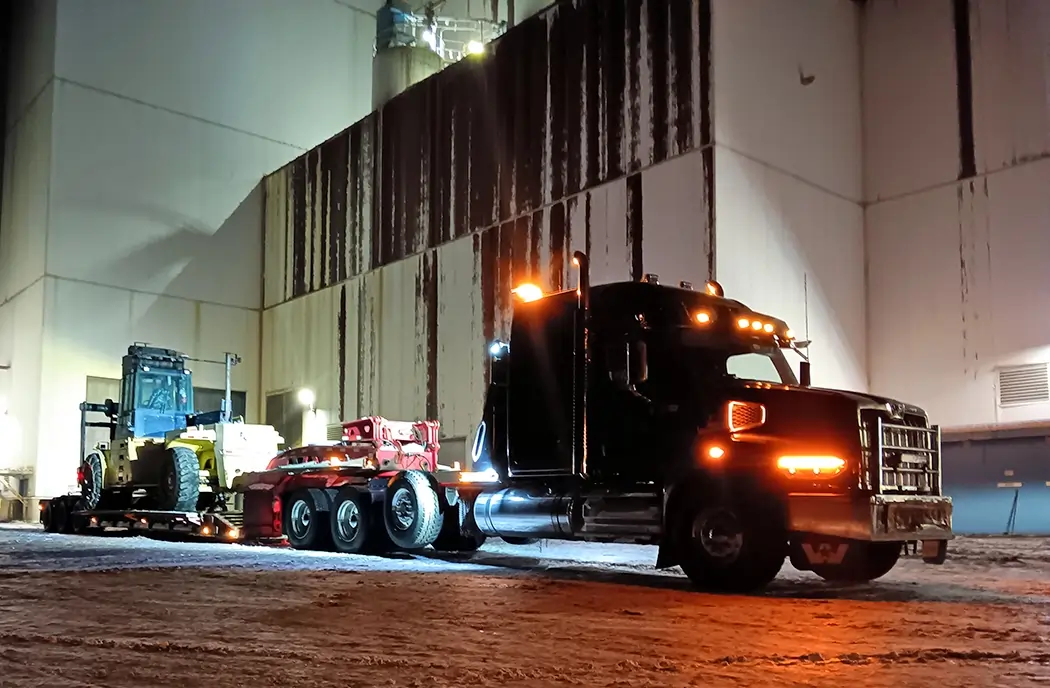
For organizations ready to make that shift, Patriot Logistics was built for this one job: end-to-end Alaska delivery with single-source accountability and Alaska-native execution. The team's operating model reflects everything outlined above, weekly consolidations from the Seattle area, orchestrated handoffs at the Port of Alaska, local crews and equipment for the interior and coast, lane-specific winter and breakup playbooks, and milestone-clean visibility through final proof of delivery.
What you'll notice working with a purpose-built Alaska partner isn't just on-time trucks, it's the absence of noise:
- • One plan, one contract, one invoice covering the actual delivery reality.
- • Verified consignees and appointments so first attempts land.
- • Fewer touches, fewer surprises, fewer "who owns this?" moments.
- • Exceptions treated as process inputs, not anecdotes.
If Alaska has been your outlier, this is how you normalize it, without publishing your budget or turning every shipment into a special project. When you're ready, the sensible first step is a focused lane pilot and a baseline-to-improvement review. From there, scale at the pace your business demands.
Alaska will always be Alaska. The point is to run a model that respects that, and wins anyway. Start with a real plan, from a team that already knows the terrain. When you're ready to simplify the complex, eliminate the guesswork, and gain reliable control over your Alaska lanes, Patriot Logistics is ready to go to work. Contact us today to learn more about our end-to-end shipping solutions.

Related Posts